The Given Dna Non Template Sequence
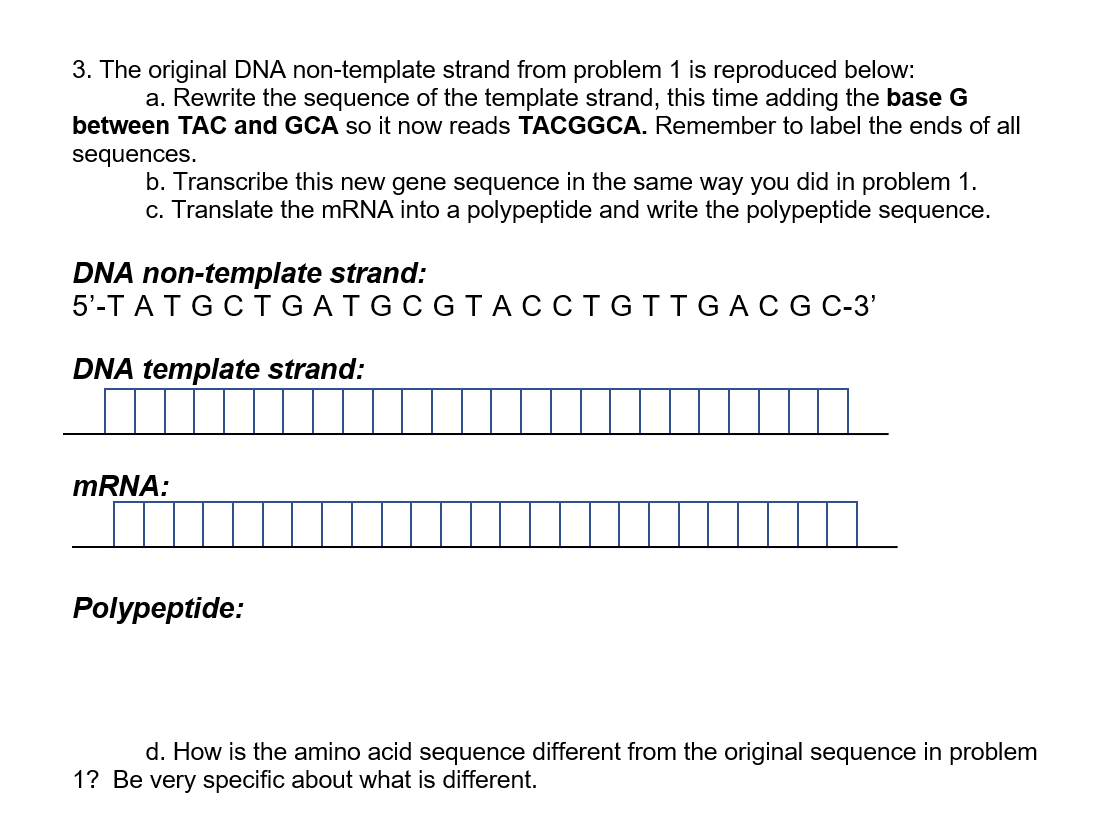
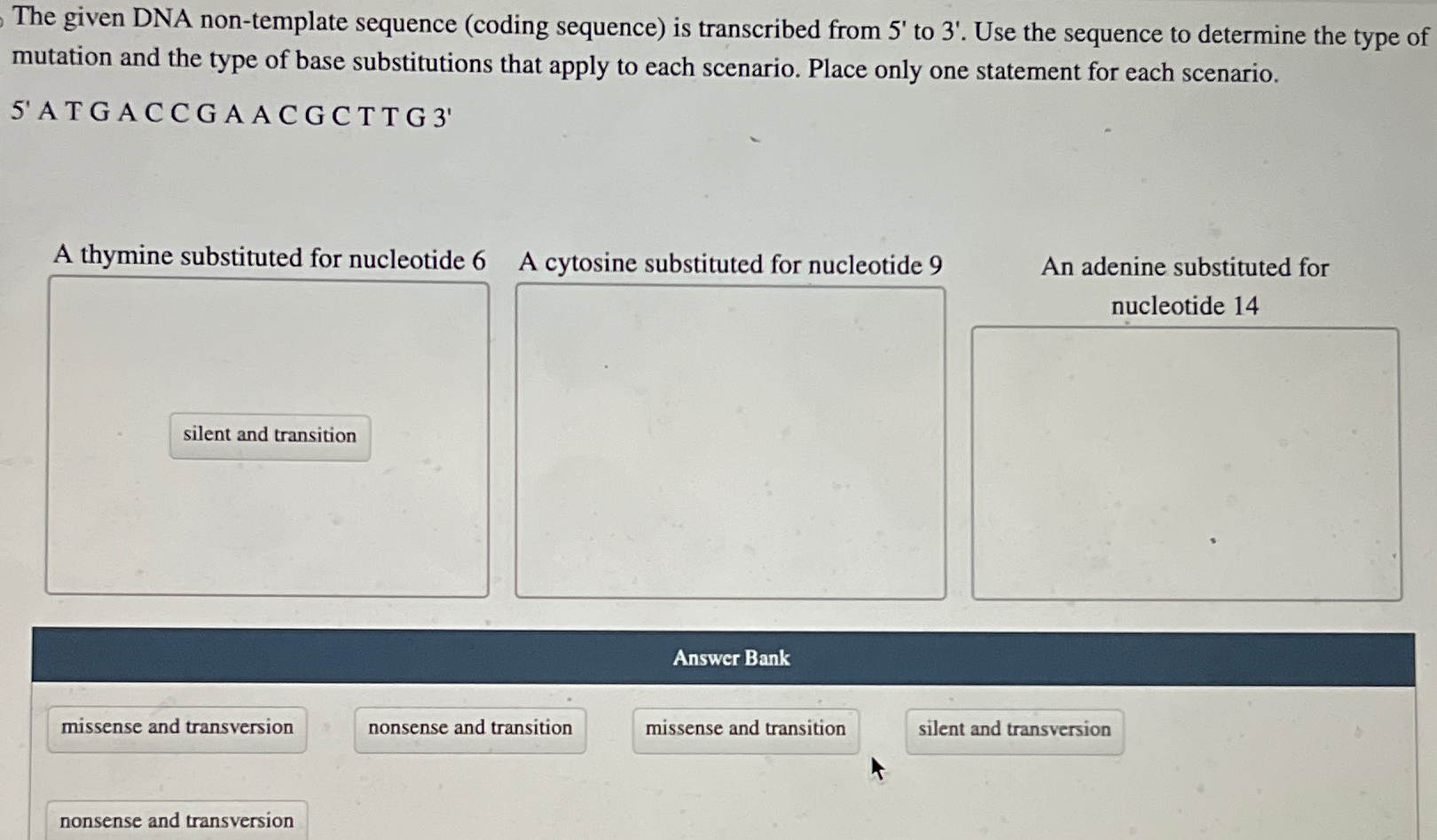
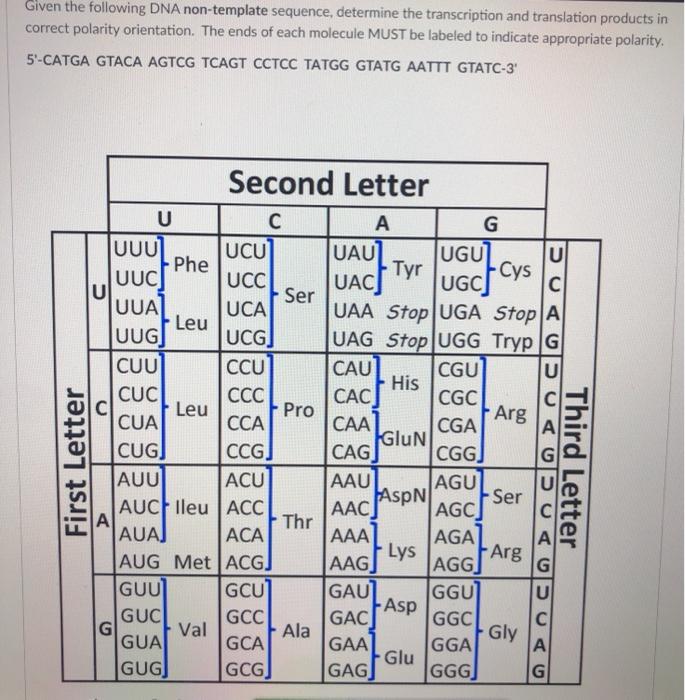
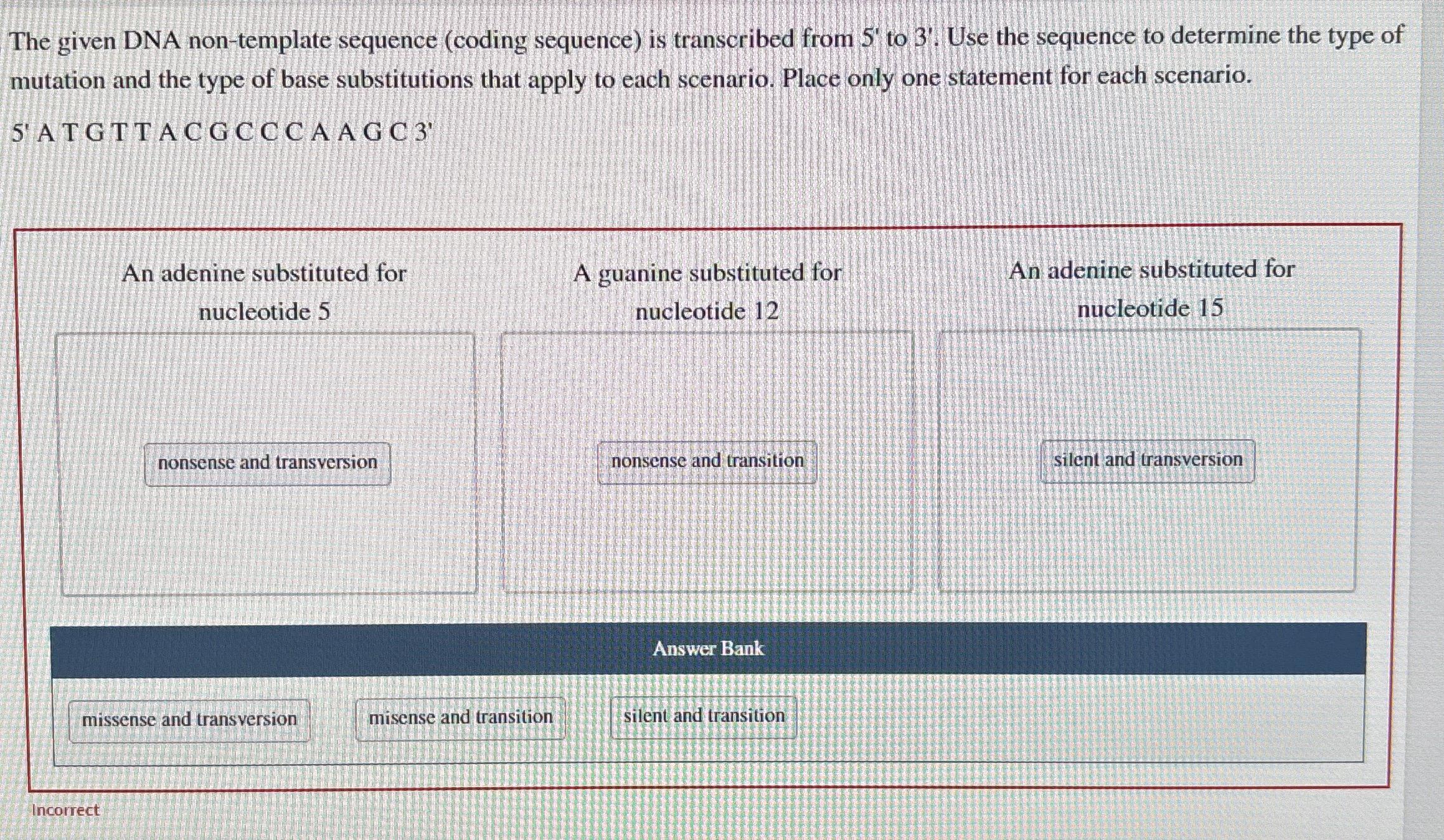
The Given Dna Non Template Sequence - Use the sequence to determine the type of mutation and the type of base substitutions that apply to. Use the sequence to determine the type of mutation and the type of base substitutions that apply to. An mrna sequence is like a middleman, carrying the genetic information from the dna inside the nucleus to the ribosomes in the cytoplasm, where proteins are synthesized. Use the sequence to determine the type of mutation and the type of base substitutions that apply to. The given dna non template sequence (coding sequence) is transcribed from 5' to 3'. Use the sequence to determine the type of mutation and the type of base substitutions that apply to. The given dna non‑template sequence (coding sequence) is transcribed from 5' to 3'. The template strand, or antisense strand, serves as the blueprint for rna. Use the sequence to determine the type of mutation and the type of base substitutions that apply to. Use the sequence to determine the type of mutation and the type of base substitutions that apply to. Use the sequence to determine the type of mutation and the type of base substitutions that apply to. Use the sequence to determine the type of mutation and the type of base substitutions that apply to. Use the sequence to determine the type of mutation and the type of base substitutions that apply to. Use the sequence to determine the type of mutation and the type of base substitutions that apply to. Use the sequence to determine the type of mutation and the type of base substitutions that apply to. Use the sequence to determine the type of mutation and the type of base substitutions that apply to. Use the sequence to determine the type of mutation and the type of base substitutions that apply to. The given dna non‑template sequence (coding sequence) is transcribed from 5' to 3'. Study with quizlet and memorize flashcards containing. The given dna non‑template sequence (coding sequence) is transcribed from 5' to 3'. Use the sequence to determine the type of mutation and the type of base substitutions that apply to. Use the sequence to determine the type of mutation and the type of base substitutions that apply to. The given dna non template sequence (coding sequence) is transcribed from 3' to 5'. An mrna sequence is like a middleman, carrying the genetic. The type of mutation and base substitutions for each scenario are stated. The template strand, or antisense strand, serves as the blueprint for rna. Use the sequence to determine the type of mutation and the type of base substitutions that apply to. Use the sequence to determine the type of mutation and the type of base substitutions that apply to.. Use the sequence to determine the type of mutation and the type of base substitutions that apply to. An mrna sequence is like a middleman, carrying the genetic information from the dna inside the nucleus to the ribosomes in the cytoplasm, where proteins are synthesized. Use the sequence to determine the type of mutation and the type of base substitutions. The given dna non template sequence (coding sequence) is transcribed from 5' to 3'. The given dna non‑template sequence (coding sequence) is transcribed from 5' to 3'. Template strand is the dna strand off which the mrna is synthesized. (4) the given dna non‑template sequence (coding sequence) is transcribed from 5' to 3'. Use the sequence to determine the type. The given dna non‑template sequence (coding sequence) is transcribed from 5' to 3'. Use the sequence to determine the type of mutation and the type of base substitutions that apply to. Use the sequence to determine the type of mutation and the type of base substitutions that apply to. The type of mutation and base substitutions for each scenario are. Use the sequence to determine the type of mutation and the type of base substitutions that apply to. The given dna non‑template sequence (coding sequence) is transcribed from 5' to 3'. Use the sequence to determine the type of mutation and the type of base substitutions that apply to. Use the sequence to determine the type of mutation and the. Use the sequence to determine the type of mutation and the type of base substitutions that apply to. Use the sequence to determine the type of mutation and the type of base substitutions that apply to. (4) the given dna non‑template sequence (coding sequence) is transcribed from 5' to 3'. Use the sequence to determine the type of mutation and. Study with quizlet and memorize flashcards containing. Use the sequence to determine the type of mutation and the type of base substitutions that apply to. Use the sequence to determine the type of mutation and the type of base substitutions that apply to. Use the sequence to determine the type of mutation and the type of base substitutions that apply. Use the sequence to determine the type of mutation and the type of base substitutions that apply to. Use the sequence to determine the type of mutation and the type of base substitutions that apply to. Use the sequence to determine the type of mutation and the type of base substitutions that apply to. The given dna non‑template sequence (coding. Use the sequence to determine the type of mutation and the type of base substitutions that apply to. Use the sequence to determine the type of mutation and the type of base substitutions that apply to. The given dna non‑template sequence (coding sequence) is transcribed from 5' to 3'. Use the sequence to determine the type of mutation and the. Study with quizlet and memorize flashcards containing. Use the sequence to determine the type of mutation and the type of base substitutions that apply to. Use the sequence to determine the type of mutation and the type of base substitutions that apply to. Template strand is the dna strand off which the mrna is synthesized. Use the sequence to determine the type of mutation and the type of base substitutions that apply to. Use the sequence to determine the type of mutation and the type of base substitutions that apply to. The given dna non‑template sequence (coding sequence) is transcribed from 5' to 3'. Use the sequence to determine the type of mutation and the type of base substitutions that apply to. The type of mutation and base substitutions for each scenario are stated. Use the sequence to determine the type of mutation and the type of base substitutions that apply to. Use the sequence to determine the type of mutation and the type of base substitutions that apply to. Use the sequence to determine the type of mutation and the type of base substitutions that apply to. Use the sequence to determine the type of mutation and the type of base substitutions that apply to. The given dna non‑template sequence (coding sequence) is transcribed from 5' to 3'. The given dna non‑template sequence (coding sequence) is transcribed from 5' to 3'. (4) the given dna non‑template sequence (coding sequence) is transcribed from 5' to 3'.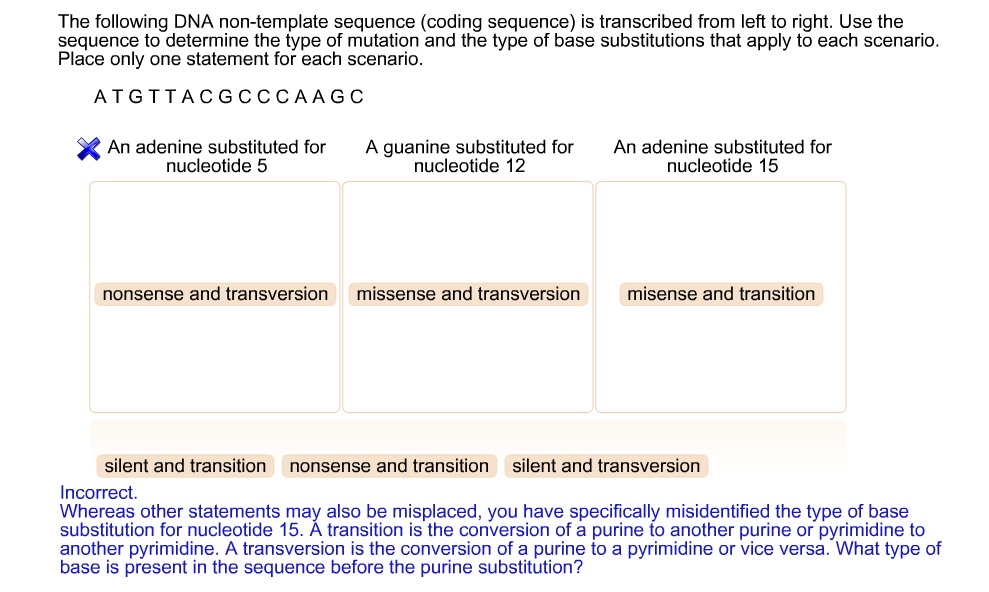
SOLVED The following DNA nontemplate sequence (coding sequence) is
Solved 1. For parts a and b below, remember to label the
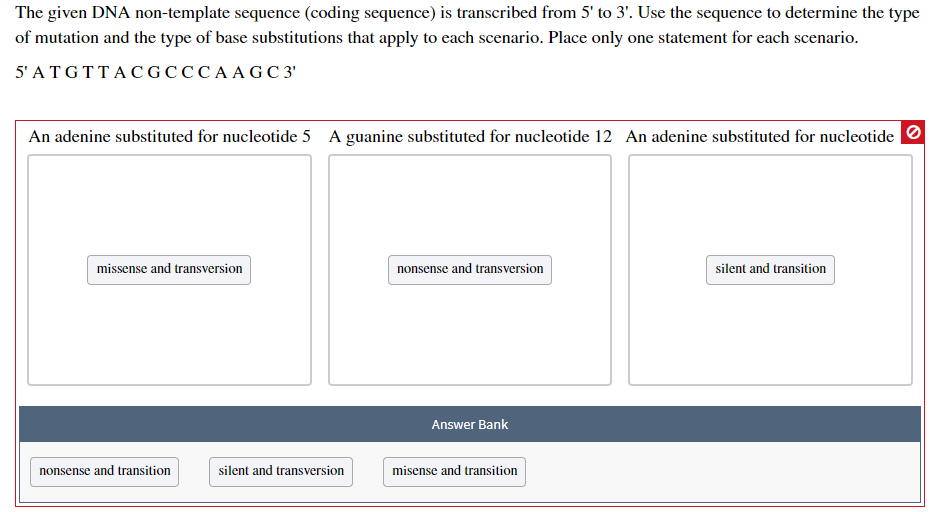
Solved The given DNA nontemplate sequence (coding sequence)
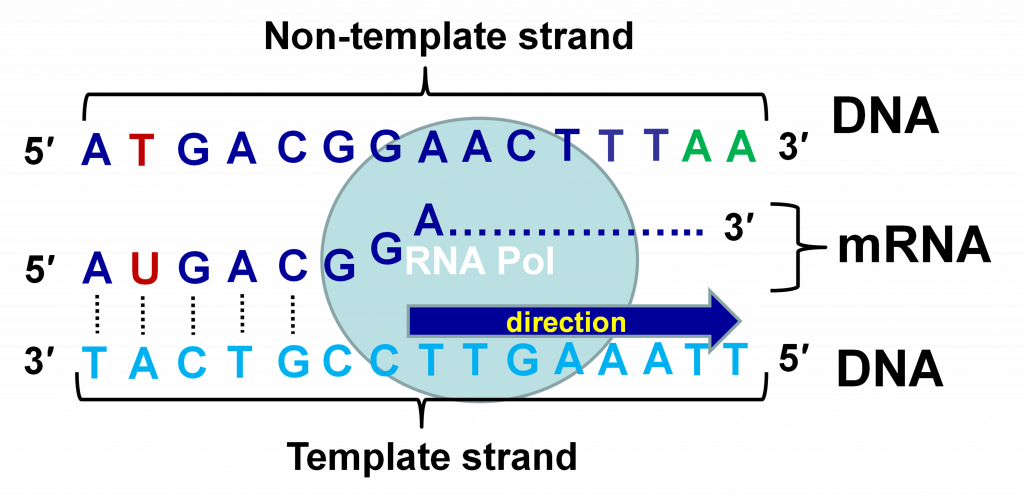
Non Template Dna Strand
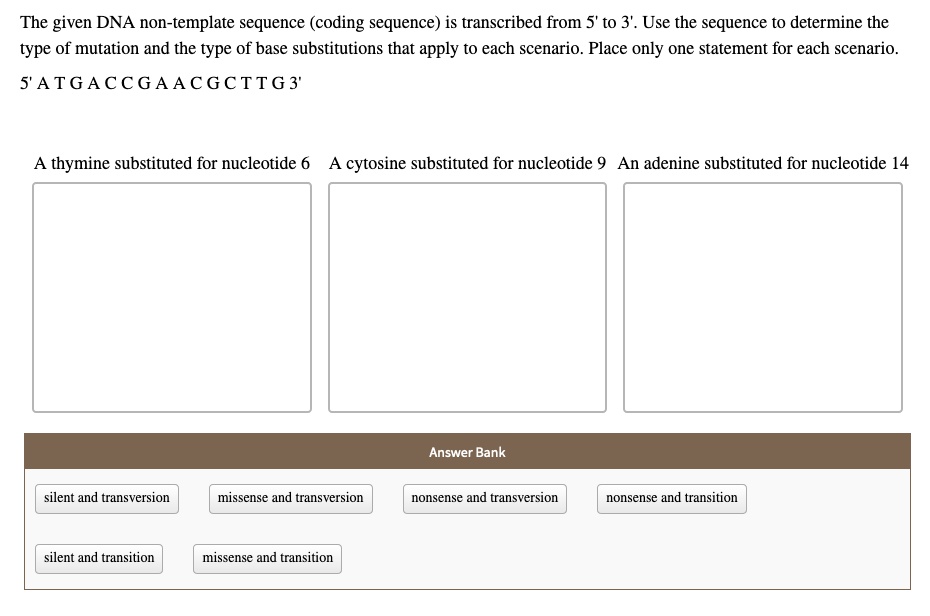
SOLVED The given DNA nontemplate sequence (coding sequence) is
Solved The given DNA nontemplate sequence (coding sequence)
Solved Given the following DNA nontemplate sequence,
Solved The given DNA nontemplate sequence (coding sequence)
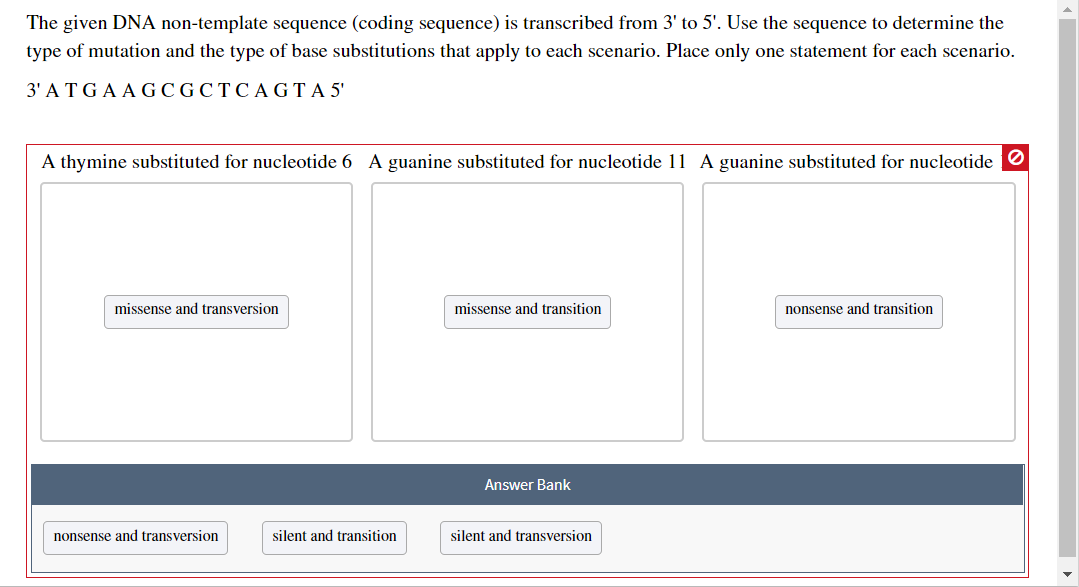
The given DNA nontemplate sequence (coding sequence)
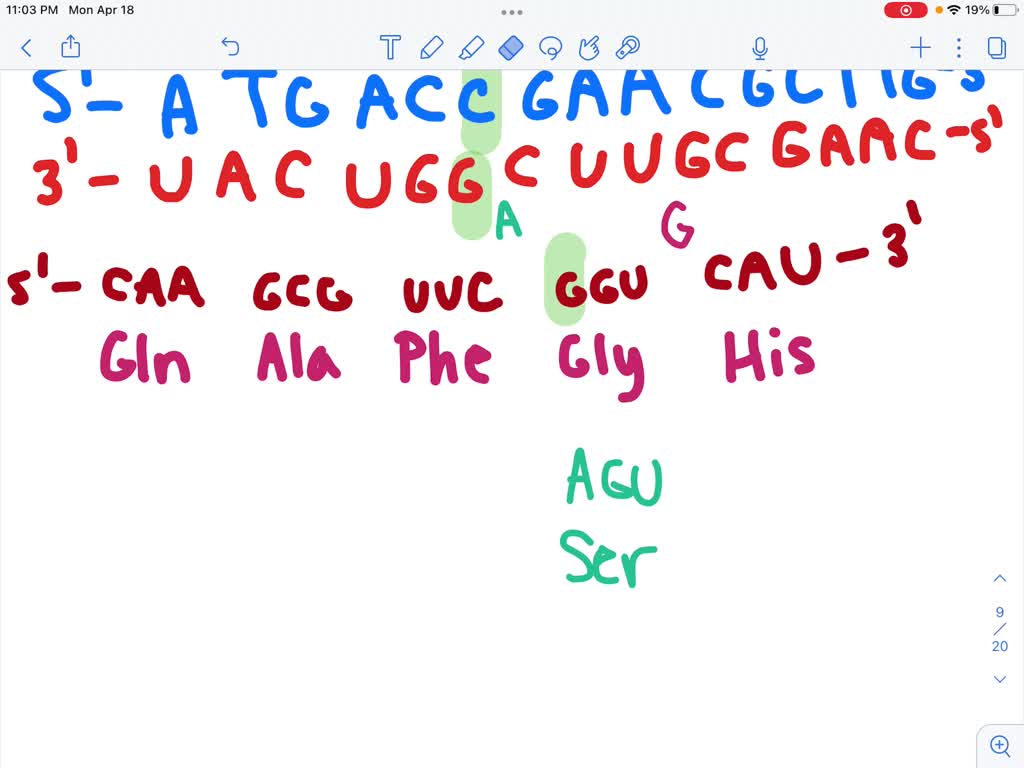
SOLVED The given DNA nontemplate coding sequence is transcribed from
The Template Strand, Or Antisense Strand, Serves As The Blueprint For Rna.
An Mrna Sequence Is Like A Middleman, Carrying The Genetic Information From The Dna Inside The Nucleus To The Ribosomes In The Cytoplasm, Where Proteins Are Synthesized.
Use The Sequence To Determine The Type Of Mutation And The Type Of Base Substitutions That Apply To.
The Given Dna Non‑Template Sequence (Coding Sequence) Is Transcribed From 5' To 3'.
Related Post: